In the ever-evolving landscape of digital marketing, effective communication is the key to capturing the attention of your target audience. One powerful tool that marketers utilize to optimize their strategies is A/B testing. This method allows you to experiment with different elements across various digital communication channels, helping you identify what resonates most with your audience. In this blog post, we’ll delve into the significance of A/B testing, its functions, and provide a comprehensive guide on implementing successful tests across diverse marketing channels.
Understanding A/B Testing: Unveiling its Power
A/B testing, also known as split testing, is a controlled experiment that compares two versions of a webpage, email, advertisement, or any other marketing asset to determine which one performs better. The goal is to optimize for a specific metric, such as click-through rates, conversion rates, or engagement.
Why A/B Testing Matters: Unlocking Marketing Potential
- Data-Driven Decision Making: A/B testing allows marketers to make informed decisions based on real user behavior and preferences rather than relying on assumptions.
- Continuous Improvement: It fosters a culture of continuous improvement by identifying and implementing changes that enhance performance over time.
- Enhanced User Experience: By testing different elements, you can discover what resonates best with your audience, leading to a more satisfying user experience.
How A/B Testing Works: The Basics
- Isolation of Variables: Only one element is changed at a time to accurately determine the impact of that specific change.
- Randomization: Users are randomly assigned to either the control group (A) or the experimental group (B) to ensure unbiased results.
- Statistical Analysis: Statistical significance is crucial. Ensure that your sample size is large enough to draw reliable conclusions from the data.
Implementing A/B Testing: Best Practices
- Define Clear Objectives: Clearly outline what you want to achieve through A/B testing. Whether it’s higher click-through rates, increased conversions, or improved engagement, having clear goals is essential.
- Test One Element at a Time: To accurately attribute changes in performance, alter only one element per test. This could be the headline, imagery, call-to-action, or any other variable.
- Segment Your Audience: Consider the diversity within your audience and conduct tests on specific segments to ensure that changes resonate across different demographics.
- Monitor Key Metrics: Track relevant metrics throughout the testing period. Regularly analyze the data to identify trends and patterns
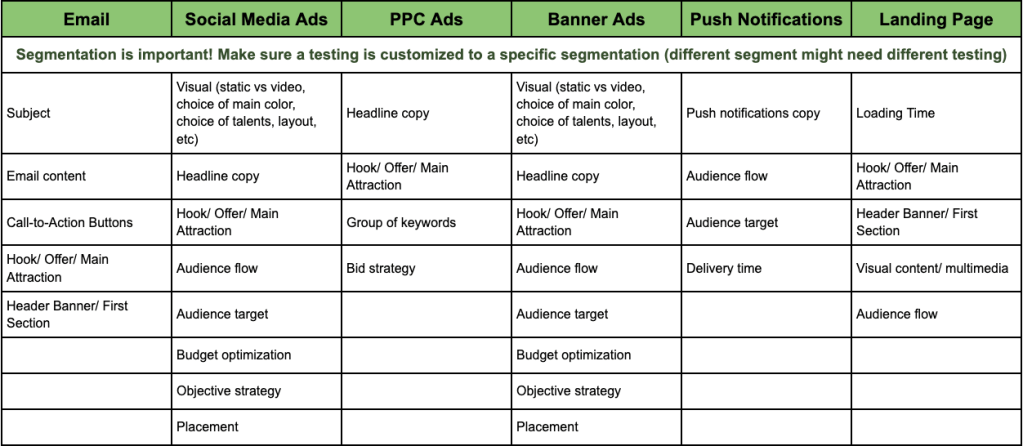
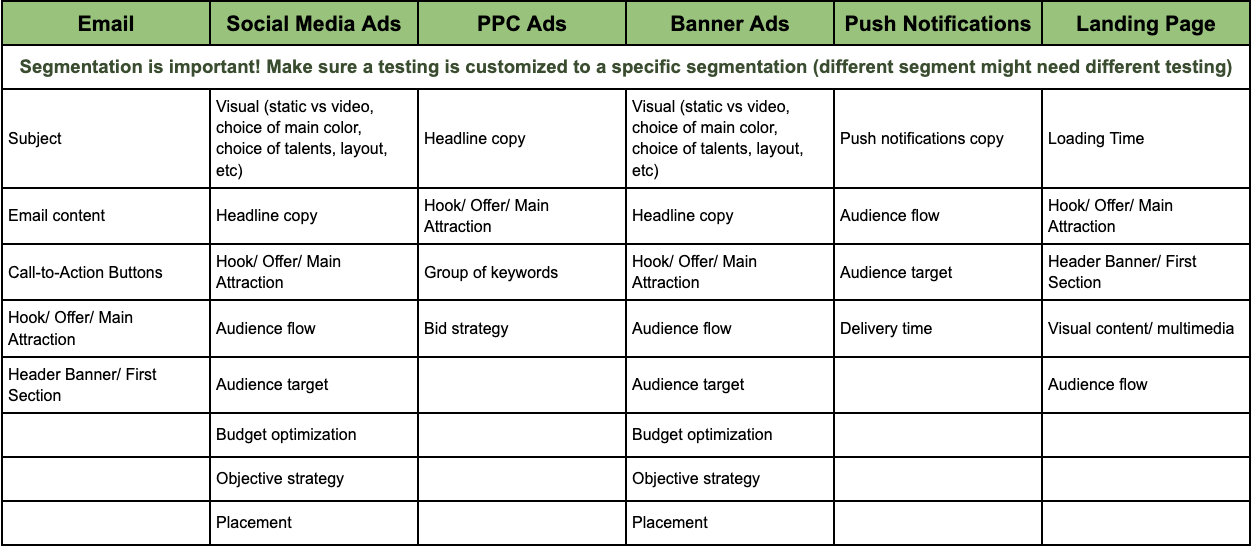
In the picture below, you can find some of the examples of elements you can test to find the most suitable strategy for your business. These examples are crafted personally by me, based on my experiences and what I have seen in different industries, but A/B testing is not just limited to these.
Case Study: A/B Testing Success Story
Imagine a scenario where an e-commerce company successfully increased conversions by 20% through A/B testing. By testing different versions of their product pages, they discovered that changing the color of the “Buy Now” button to green significantly increased click-through rates and, ultimately, conversions.
In conclusion, A/B testing is a dynamic and invaluable tool in the marketer’s arsenal. By methodically testing and optimizing various elements across digital communication channels, you can unlock insights that lead to more effective and impactful campaigns. Embrace the power of A/B testing to stay ahead in the competitive world of digital marketing.
 Cinthya
Leave a comment