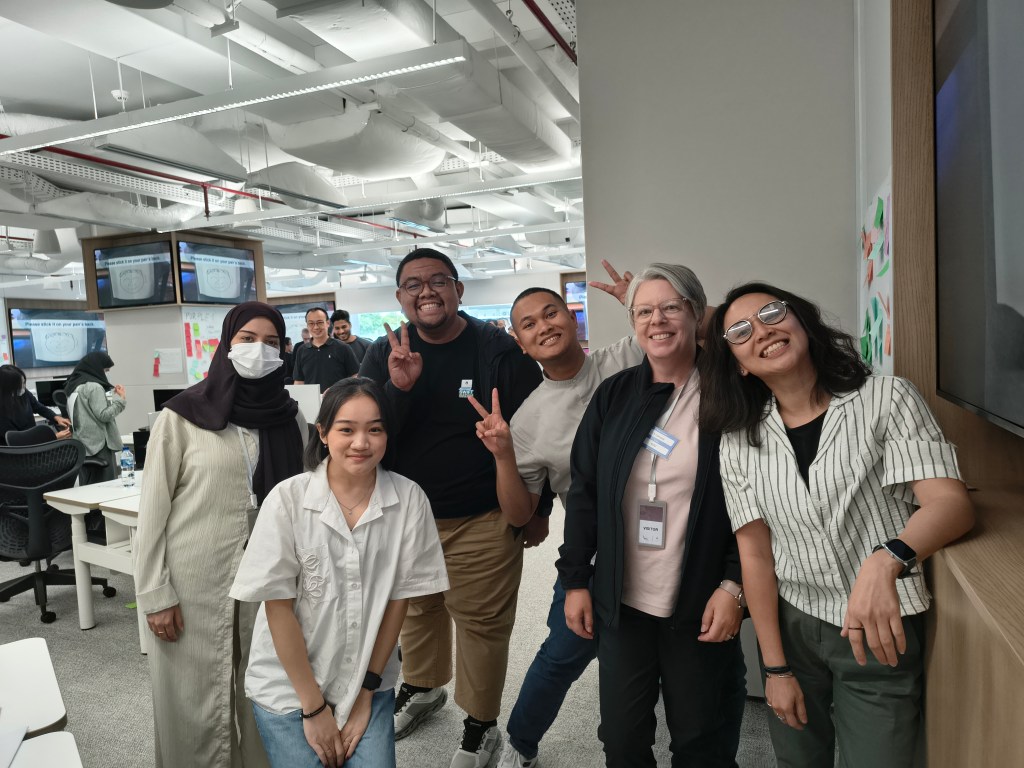
Last week, I stepped into a learning experience that quietly reshaped the way I think about building, collaborating, and even leading.
I joined Professional Learning Asia (PLA) by Apple, where we explored Challenge Based Learning (CBL), an approach that shifts the focus from simply solving problems to deeply understanding challenges through curiosity, empathy, and iteration.
What I didn’t expect was how relevant the experience would be, not just for educators or mentors, but for me as a marketer.
And perhaps the biggest surprise? We didn’t just talk about frameworks.
We built.
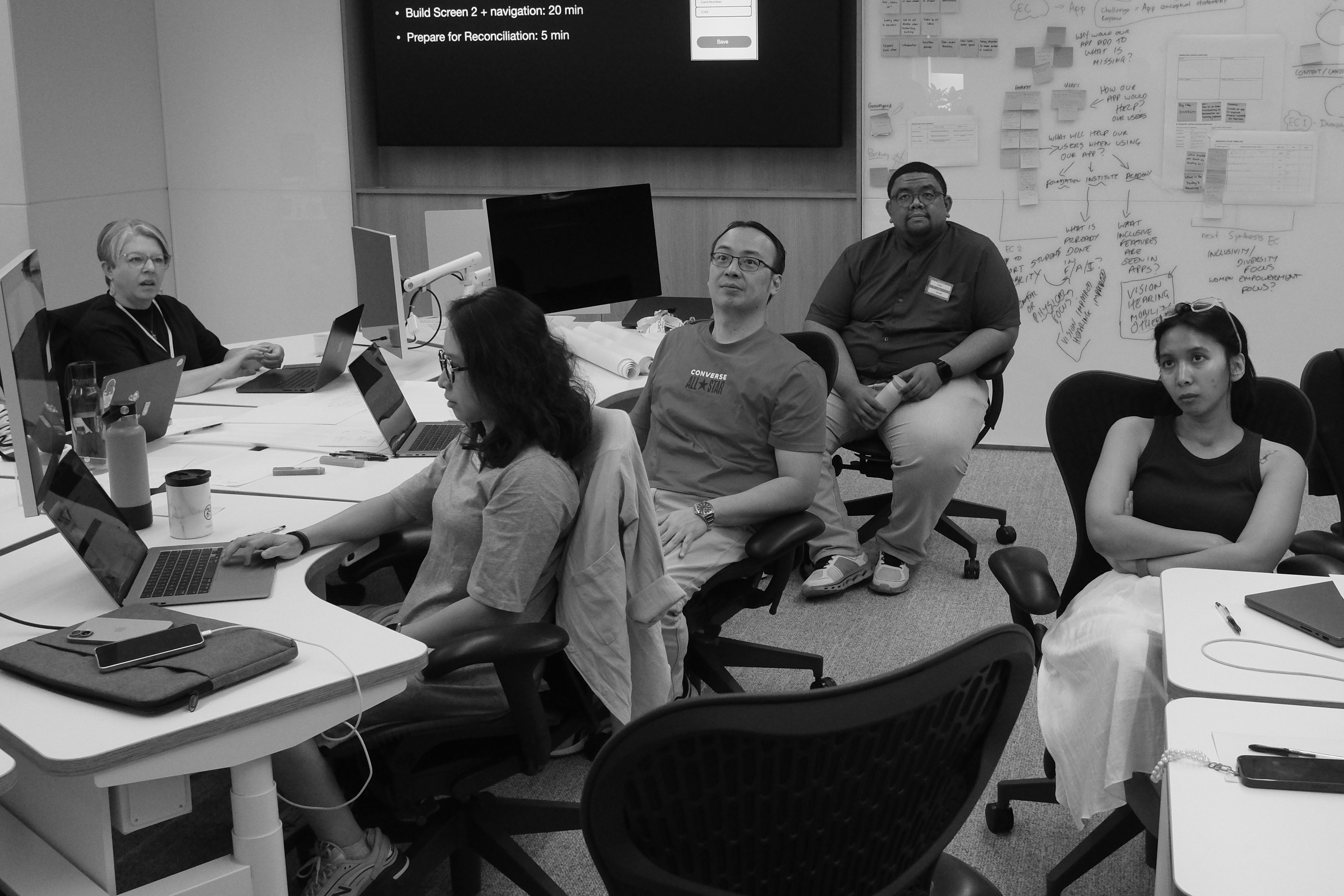
As a team, we created an iOS app called ThirdEye, an app designed to help product designers with normal vision build stronger awareness and empathy when designing for users with visual limitations. The goal wasn’t just functionality. It was perspective. ThirdEye aims to encourage designers to pause and ask: Are we truly designing for everyone?
But beyond the app itself, the real transformation happened in the process.
Not Everything Has to Start with a Problem
We are trained to start with problems.
“What’s the pain point?”
“What’s broken?”
“What needs fixing?”
And while that approach works, CBL introduced a subtle but powerful shift: sometimes you start with curiosity.
Instead of asking, “What problem are we solving?” we began with questions.
What if designers could experience visual limitations in a different way?
What if empathy could be embedded earlier in the design process?
What if awareness could influence better decisions before products even reach users?
Curiosity creates space.
When you begin with curiosity, you’re not rushing toward a predefined solution. You’re allowing discovery to guide you. You’re opening doors rather than narrowing them too quickly.
As a marketer, this hit home.
We often start campaigns with a target metric or a sales goal. But what if we started with curiosity instead?
What does our audience truly experience?
What assumptions are we making about them?
What perspective are we missing?
Curiosity doesn’t slow progress. It deepens it.
Building ThirdEye: Empathy in Action
The idea behind ThirdEye was rooted in inclusion.
Many digital products today are built by teams with normal vision. While accessibility standards exist, empathy is harder to teach than compliance. You can follow guidelines, but do you truly understand the lived experience of users with visual impairments?
ThirdEye was conceptualized as a tool to help bridge that gap.
Through interactive simulations and guided reflections, it encourages product designers to step into another perspective. It doesn’t claim to replicate the full experience of visual impairment. Instead, it nudges awareness. It invites reflection. It sparks conversation.
And in building it, we experienced the very lesson we were trying to deliver.
Empathy is built through immersion.
As we worked through ideation, prototyping, and iteration, we constantly asked ourselves:
Are we assuming too much?
Are we designing based on convenience?
Are we thinking from our own lens?
The app became a mirror.
The Discipline of Staying in the Process
One of my biggest personal takeaways from PLA was learning to resist the urge to jump ahead.
In fast-paced environments, especially in marketing, speed is often rewarded. We move quickly from insight to strategy to execution. We anticipate outcomes before fully exploring the present.
But during CBL, the process demanded patience.
Before moving into solution mode, we had to sit with the challenge. We had to unpack it. Discuss it. Question it. Reframe it. And sometimes (actually, many times), revisit it.
There were moments when I caught myself wanting to leap two steps ahead.
“Let’s just decide.”
“Let’s just build.”
“We already know where this is going.”
I’m glad we did not just decide and build. What I imagined to build in the beginning was a complete different from what we ended up creating and I can see the end result now covers a lot of gaps I would’ve had.
Because each time we slowed down, something new surfaced.
An overlooked assumption.
A better framing.
A sharper insight.
Enjoying the process isn’t about being slow for the sake of it. It’s about being present enough to see what rushing might hide.
This was a humbling reminder.
When we rush, we might reach the finish line faster, but we risk building on incomplete understanding.
When we stay in the process, we build with depth.
Peer-to-Peer Learning: The Multiplier Effect
Another powerful dimension of PLA was the peer dynamic.
The experience was highly collaborative. Ideas were debated, refined, and sometimes challenged. And that’s where growth happened.
Peer-to-peer learning is different from top-down instruction.
It’s dynamic. It’s unpredictable. It forces you to articulate your thinking clearly. It exposes blind spots. It stretches perspectives.
In our team discussions, I noticed how different professional backgrounds shaped how each person saw the same challenge. Some leaned toward technical feasibility. Others toward user experience. Others toward storytelling.
The combination strengthened the output.
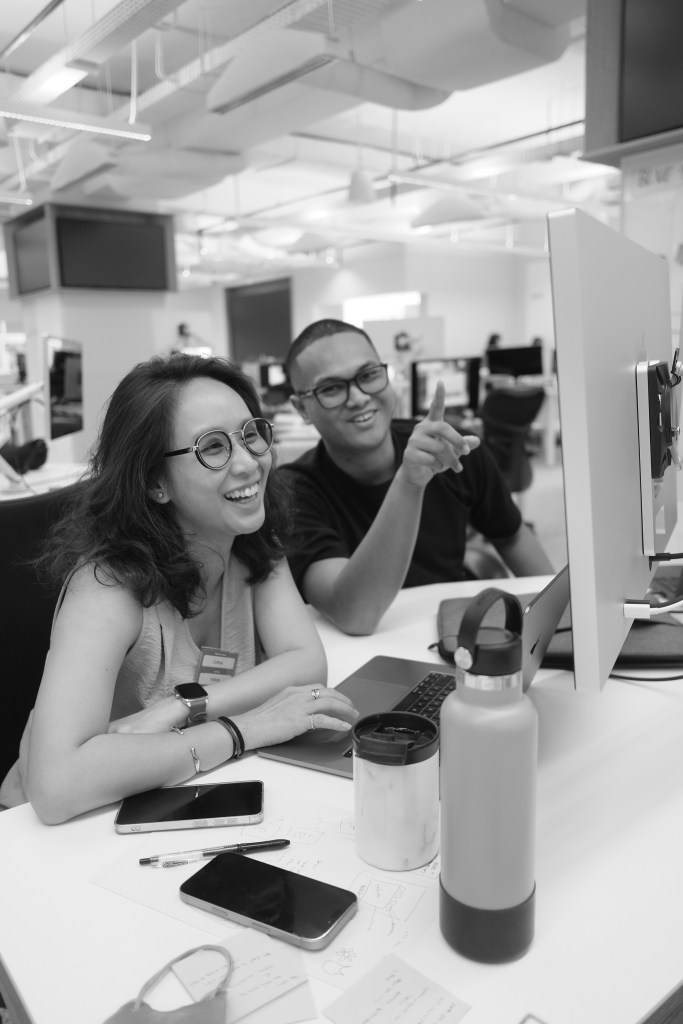
As marketers, we often collaborate cross-functionally, with designers, engineers, product teams, leadership. PLA reinforced something important: collaboration isn’t just coordination. It’s co-creation.
True peer learning requires openness.
Openness to being wrong.
Openness to shifting direction.
Openness to building something better than what you initially imagined.
That mindset alone is transformative.
Why CBL Resonates Deeply with Marketing
At first glance, Challenge Based Learning seems tailored for educators and mentors. It emphasizes guided exploration, reflective thinking, and iterative learning journeys.
But the more I immersed myself in it, the clearer the parallels became.
Marketing, at its core, is about framing the right challenge.
Not just:
“How do we increase conversions?”
But:
“How do we build meaningful engagement?”
“How do we create resonance?”
“How do we communicate in a way that feels human?”
Planning a campaign is remarkably similar to CBL:
- Define the challenge.
- Explore context and perspectives.
- Generate insights.
- Prototype ideas.
- Test and refine.
- Reflect and iterate.
When done well, marketing is not about pushing messages. It’s about building relevance through empathy and experimentation.
PLA reminded me that campaigns shouldn’t start with tactics. They should start with understanding.
And understanding requires curiosity.
Leadership Lessons Hidden in Learning
Beyond product and marketing parallels, PLA also strengthened my view on leadership.
Good leadership isn’t about having the fastest answers. It’s about holding space for exploration.
It’s about guiding a team through ambiguity without rushing to close it too quickly.
It’s about creating psychological safety where ideas can evolve.
During the app-building process, moments of uncertainty surfaced. And instead of seeing uncertainty as a weakness, we treated it as part of the journey.
That shift in mindset is powerful.
In professional environments, we often equate uncertainty with inefficiency. But innovation lives in that gray space.
Leaders who can stay present in the process, who can balance direction with openness, they build stronger teams.
Building What’s Next, Differently
The PLA experience didn’t just teach me about CBL. It reminded me of something fundamental:
Growth doesn’t happen when we rush to conclusions.
It happens when we’re willing to explore, reflect, and build thoughtfully.
As a marketer, I’m returning to my work with sharper empathy, stronger collaboration instincts, and a deeper appreciation for process.
As a professional, I’m reminded that learning environments, especially those that challenge how we think, are essential to staying relevant.
And as someone who helped build ThirdEye, I’m proud of what we created. Not just the app itself, but the mindset behind it.
Because whether we’re designing products, leading teams, or building campaigns, the principle remains the same:
Start with curiosity.
Stay in the process.
Build with empathy.
That’s where meaningful impact begins.
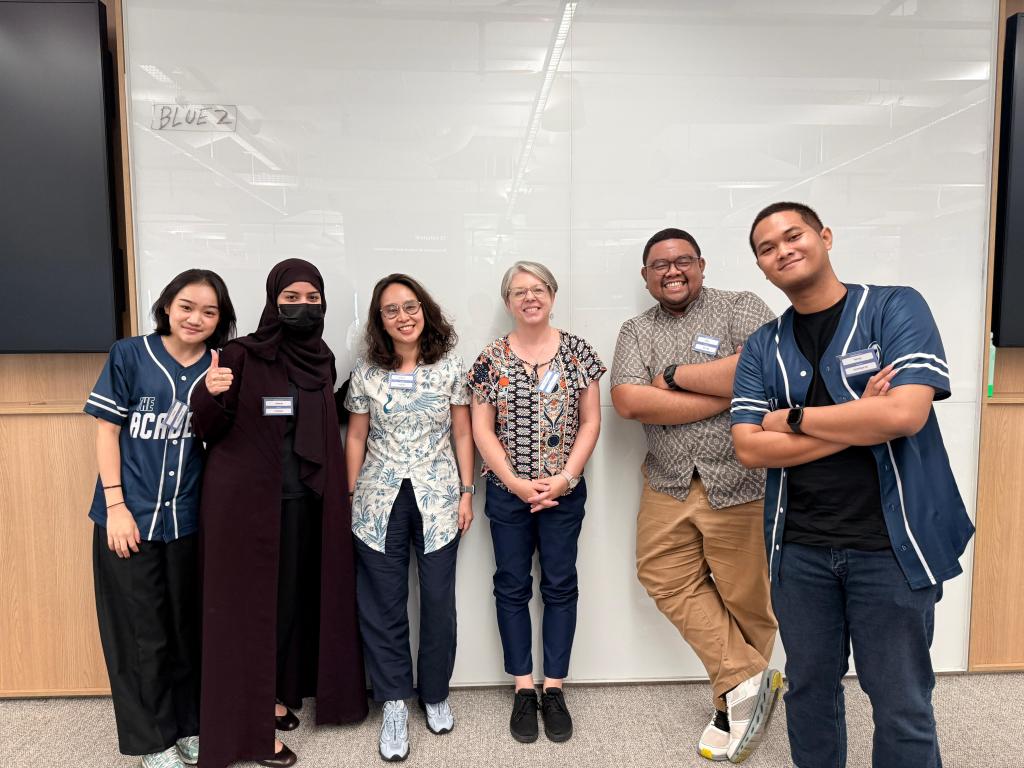
And that’s how we build what’s next.
-Cinthya.
 Cinthya
Leave a comment