
Artificial Intelligence (AI) has completely transformed how I work as a marketer. From brainstorming copy ideas to generating landing page content, optimizing strategy, AI tools have become essential in my daily workflow. Yet, as a climate advocate, that convenience hit me with a conflicting feeling: How sustainable is the technology I rely on every day?
This article shares my personal journey, what the research reveals about AI’s environmental footprint, and actionable ways we can use AI efficiently without accelerating climate damage.
From Marketing Magic to Climate Reality
As a modern marketer, adopting AI was like a basic necessity:
- I could generate fresh copy in seconds.
- I could brainstorm campaign ideas with unusual insights.
- I could explore alternative messaging angles without starting from a blank page.
AI didn’t just save me time, it boosted creativity. Tasks that used to take hours now took minutes. I wasn’t just more productive, I was strategically better at my job.
But behind that productivity lay an uncomfortable truth: every AI interaction consumes real-world energy, and energy has environmental costs.
Suddenly, the tools that helped me meet tight deadlines made me pause and ask:
“Am I reducing my own cognitive load at the expense of the planet’s ecosystem? Is the convenience worth the unseen environmental cost?”
That question led me down a deep research journey on AI’s environmental impact, and what I found surprised me.
AI’s Environmental Footprint: What the Data Shows
Contrary to popular belief, AI isn’t just software running in the cloud. It depends on massive data centers, energy-intensive servers, specialized hardware (like GPUs), and huge cooling infrastructure. All of which have significant environmental consequences.
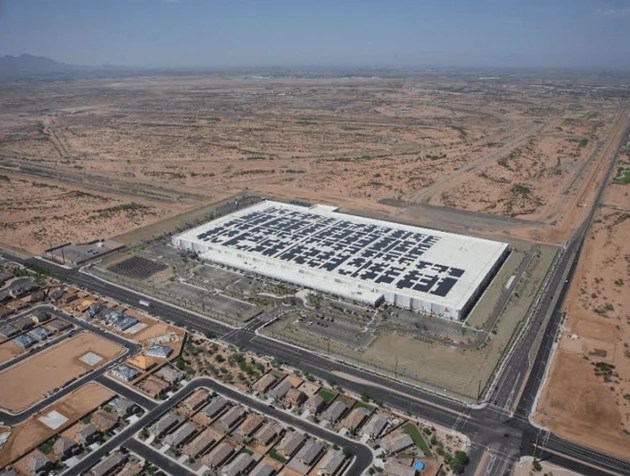
1. AI Is Energy-Hungry
Research shows that global data centers, the backbone of AI, consumed around 415 terawatt-hours (TWh) of electricity in 2022, making them one of the world’s largest energy users. Much of that is driven by AI workloads.
One analysis even estimates AI systems could soon account for nearly half of global data center power usage as demand surges.
To put that in perspective:
If data centers were a country, their electricity use would rival nations like France or Saudi Arabia.
2. Carbon Emissions Are Rising Fast
It’s not just energy, it’s where that energy comes from. Many data centers still rely on fossil-fuel electricity, which translates into greenhouse gas emissions.
A United Nations agency reported that indirect emissions from major AI-focused tech companies increased by 150% in just three years (2020–2023), linked almost entirely to energy use from AI infrastructure.
Even if companies set climate targets, the actual emissions from AI expansion continue to rise, and analytics suggest AI could contribute millions of tons of CO₂ equivalent annually if unchecked.
3. Water and Resource Consumption Add to the Impact
AI servers don’t just use electricity, they need cooling. Cooling systems in data centers require billions of gallons of water each year to prevent overheating.
And beyond water, the rapid production and replacement of GPUs and other hardware contribute to:
- Electronic waste
- Rare earth mineral mining
- Soil and habitat disruption
All these factors carry long-term ecological and environmental costs, things that don’t show up in our monthly software bills but matter for planetary health.
But Is AI All Bad for the Planet?
The picture isn’t entirely negative. Some research suggests AI can help reduce emissions in other sectors through optimization:
- Optimizing energy grids
- Predicting climate risks
- Reducing inefficiencies in agriculture and transportation
AI can assist sustainability solutions, but that doesn’t excuse its own environmental footprint.
The key distinction is this:
AI’s potential environmental benefits should not be used to justify ignoring its environmental costs.
My Middle Ground: How to Use AI Responsibly
After digging into the data, I realized the answer isn’t rejecting AI, it’s using it more consciously.
Here’s how I’ve adapted both personally and professionally:
1. Choose the Right Tool for the Right Job
Not all AI models have the same environmental impact. Smaller, task-specific models consume much less energy than huge general models.
Research shows that selecting appropriate models for the task can reduce energy use significantly and improve efficiency.
If a small model can do 80–90% of the job you need, there’s no reason to use a massive one.
2. Don’t Waste Prompts. Think Before You Ask
Every time you send a prompt to an AI, a server processes it, using energy.
I now plan my prompts intentionally:
- Draft my own version first or ask a question with full context
- Ask AI to refine or expand
- Avoid generating multiple variations needlessly
This reduces unnecessary queries and keeps my AI usage efficient.
3. Limit Usage When It’s Not Necessary
Sometimes the best choice is no AI at all, especially if the task is simple or doesn’t require automation.

I use AI the most for copywriting and creative ideas brainstorming. While this is considered as a small task, I still try to limit the usage and let my old habit to be in tune with my brain again. Now I have been using Thesaurus more (again) and read more articles, researches for copywriting and creative ideas. Not only that this still works, it also helps balance mental engagement, brain quality, and environmental impact.
Am I Still Using AI? Absolutely. But With Intention
Today, I still use AI for brainstorming, drafts, and ideation. It’s too valuable to ignore.
But I use it with full awareness and thoughtful intention.
I also consciously ask myself: “Does the benefit outweigh the environmental cost?”
AI, Work, and Planetary Responsibility
AI is not inherently evil, nor is it inherently green.
It’s a powerful tool, and like all tools, its impact depends on how we wield it.
As professionals, creators, and global citizens, we have the responsibility to:
- Know the environmental cost
- Choose tools and methods that reduce harm
- Use AI deliberately, not mindlessly
Only then can we enjoy the benefits of AI, without silently contributing to environmental degradation.
If you’re using AI today (and you probably are), ask yourself:
“Am I using AI wisely, for both productivity and planetary sustainability?”
That’s the question worth answering.
-Cinthya.

 Cinthya
Leave a comment