
Artificial Intelligence has changed the way I work, dramatically.
As a marketer with more than a decade of experience, I used to rely heavily on thesauruses, dictionaries, long-form articles, books, and deep reading to build campaigns. I would spend hours searching for the perfect naming for a campaign, refining messaging angles, scanning industry case studies, and connecting ideas from different domains to craft something original.
Today? I can generate 30 naming ideas in 30 seconds. Efficient? Yes. Empowering? Absolutely. But harmless? I’m not so sure anymore.
This article explores how the brain reacts to outsourcing thinking to AI, what recent research says about cognitive load and learning, and how I personally navigate the tension between productivity and mental fitness.
Understanding the Brain: A Quick Neuroscience Primer
To appreciate how AI might influence our thinking habits, it helps to understand what the brain actually does.
The brain is one of the most complex organs in the human body, controlling thought, memory, emotion, sensory perception, movement, and decision-making. At a high level, it can be divided into key areas with specialized roles: the cerebrum, cerebellum, and brainstem, each with distinct functions. I’m not an expert, but for this blog, I have quickly learned and picked up some ideas from here.
Cerebrum: Where Thinking Happens
The largest part of the brain, the cerebrum controls higher-order cerebral functions like:
- Judgment and decision-making
- Problem-solving
- Language and memory
- Emotion and reasoning
These functions involve multiple lobes, such as the frontal lobe (decision-making), the temporal lobe (memory and speech), and the parietal lobe (spatial understanding).
Hippocampus and Memory Encoding
Embedded deep in the temporal lobe, the hippocampus plays a vital role in memory formation and learning, especially turning short-term experiences into lasting memories.
Frontal Networks and Executive Function
The frontal cortex and its connected neural networks, such as the frontoparietal network, support sustained attention, working memory, and complex problem-solving. This network is critical for tasks requiring deep thought and cognitive control.
The Brain and the “Use It or Lose It” Principle
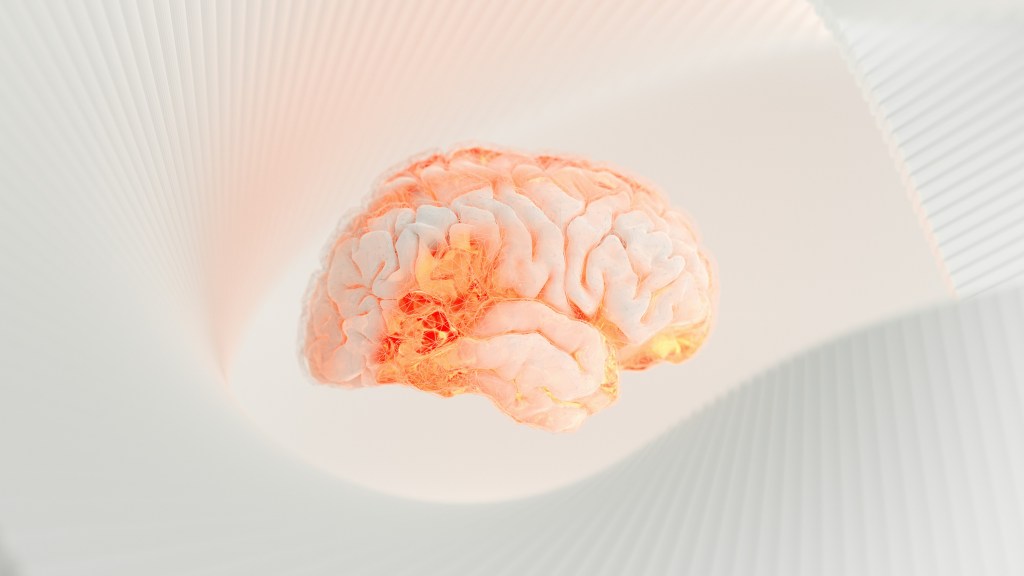
The human brain thrives on effort. Neuroscience consistently shows that cognitive effort, struggling through a problem, recalling information, generating ideas, strengthens neural pathways. Mental resistance builds mental capacity.
But when we outsource too much thinking, something shifts.
Recent reporting from Popular Mechanics discussed research suggesting that heavy reliance on large language models (LLMs) may reduce cognitive load in ways that weaken active engagement. When AI generates answers instantly, users may experience less deep processing and reduced mental strain, which sounds positive, but can mean less cognitive exercise overall.
Similarly, a TIME article examining AI in education highlighted concerns that students who over-rely on AI tools like ChatGPT or Google may bypass the mental effort required for durable learning. If the brain doesn’t wrestle with the material, retention and understanding suffer.
In simple terms: If AI does the heavy lifting, the brain doesn’t train as hard. And the brain, like muscle, adapts to how it is used.
My Life Before AI: Slower, But Mentally Intense
Before AI became embedded in daily workflows, my marketing process looked very different.
If I needed to:
- Name a campaign
- Develop positioning
- Craft a tagline
- Create a partnership proposal
- Design a content pillar strategy
I would:
- Browse through multiple industry articles
- Cross-check dictionaries and thesauruses
- Read competitor case studies
- Sketch mind maps
- Draft multiple versions manually
It was slower. But it forced deep immersion.
When I brainstormed naming ideas, I didn’t just search for synonyms, I tried to understand emotion, cultural nuance, rhythm, phonetics, and strategic positioning.
The internet, in its early promise, was about connection and information expansion. It broadened access, but it didn’t generate thinking for us. We still had to synthesize.
AI is different. AI doesn’t just give access to information.
It synthesizes it for you. And that changes the cognitive equation.
AI today is now faster than ever. Everything from words to visual to voice can be AI-ed. Now, if I need:
- 20 campaign names
- 5 messaging frameworks
- 10 social media hooks
- A structured partnership scheme
- Brainstorming prompts
I open AI. Within minutes, I have structured options. To be fair, the efficiency gain is real. Tasks that once took half a day can now be reduced to an hour or less. In my personal experience, AI hasn’t replaced months of work, but it has compressed hours of ideation into minutes.
And in modern corporate environments, speed matters.
Living without AI today feels almost “inefficient”, even irresponsible. If everyone else is moving faster, not using AI feels like voluntarily slowing down.
Psychologists call this phenomenon cognitive offloading, when we rely on external tools to reduce mental effort.
We’ve done this before:
- Writing reduced the need for memorization.
- Calculators reduced mental arithmetic.
- GPS reduced spatial navigation practice.
Studies have shown that frequent GPS use, for example, can weaken spatial memory because users stop forming mental maps.
AI could represent a similar cognitive shift, but at a much larger scale. Unlike calculators or GPS, AI does not only handle writing, nowadays it gets to producing creative visuals, voices, and many others.
These are high-level executive functions traditionally exercised by the prefrontal cortex. If we outsource too many of these tasks, the brain may adapt by investing less effort in those pathways.
The concern isn’t that AI makes us instantly “dumber.”
The concern is gradual cognitive deconditioning.
The Subtle Changes I Noticed
I began noticing subtle patterns in myself:
- Lower tolerance for blank pages.
Before AI, staring at a blank slide deck forced creativity. Now, I instinctively open AI to break the silence. - Reduced brainstorming endurance.
I used to sit with an idea longer. Now, I reach for quick stimulation. - Less deep reading.
Why read five long articles when AI can summarize them? - Shorter ideation loops.
I refine AI’s suggestions rather than build from scratch.
None of these feel dramatic. But together, they signal something important: My brain is adapting to convenience. And adaptation isn’t always positive.
We’ve already seen how internet addiction affects the body:
- Less movement
- More sedentary behavior
- Reduced physical endurance
AI may represent the cognitive equivalent. If we stop moving our bodies, muscles weaken. If we stop straining our minds, cognitive stamina declines.
And this compounds with another issue I deeply care about, the environmental cost of AI. Massive data centers, high energy consumption, and growing carbon emissions mean AI isn’t just affecting our brains; it’s affecting the planet.
So I find myself in a dual tension:
- AI makes me better at my job.
- AI may reduce mental training.
- AI also carries environmental consequences.
That’s not an easy equation. I wrote more about this battle with the environmental cost here.
Let’s be honest, it’s important to stay balanced. AI was invented, like the internet, to expand access, accelerate innovation, increase efficiency, and remove repetitive burdens. And it does those things remarkably well.
The problem is not AI itself. The problem is unconscious dependence. The brain doesn’t deteriorate because tools exist. It deteriorates when effort disappears entirely.
The real risk is to lose cognitive friction. Friction builds intelligence. When I used to struggle with finding the right campaign name, that friction forced:
- Emotional sensitivity
- Linguistic precision
- Cultural awareness
- Strategic thinking
When AI gives me 30 options instantly, I skip the discomfort phase. And discomfort is often where original thinking emerges. The more we eliminate friction, the more we risk flattening creativity.
How I’m Rebalancing AI and My Brain
I’m not quitting AI. That’s unrealistic. But I am experimenting with intentional boundaries:
1. Think First, Ask Later
Before opening AI, I now force myself to draft:
- At least 5 naming ideas
- A rough messaging angle
- A skeleton outline
- A full context of basic 5W1H as a background information
Then I use AI to expand or challenge. This preserves primary thinking and some quick stroll on some articles and researches.
2. Use AI as a Sparring Partner, Not a Replacement
Instead of asking “Give me ideas”, I ask: “What are weaknesses in my idea?”, “How can this positioning fail?”, “What angle am I missing?”
This keeps me cognitively engaged and thinking critically of might and might not happen. This replaces the brainstorming meetings we could have had more with the team at work.
3. Read Deeply Again
Summaries are efficient, but deep reading trains sustained attention. I’ve started reintroducing long-form reading to rebuild cognitive endurance. For my personal needs and set up, I target a specific time range for me to finish a book. In that activity, I also inserted more exercises for my brain, by writing down my takeaway for every chapter.
4. Stay Aware of Environmental Impact
Using AI less frequently, or more intentionally, doesn’t just protect my brain. It also slightly reduces unnecessary computational load. Efficiency should not mean excess.
The Future of Thinking in an AI World
The debate about AI and brain function will only intensify. Some argue AI will elevate us, freeing mental space for higher-order thinking. Others worry it will erode foundational skills. Both could be true.

We are entering a world where intelligence may shift from:
- Memorization → Discernment
- Generation → Judgment
- Creation → Curation
But even curation requires a strong cognitive foundation. If we never learn to build from scratch, our ability to evaluate AI outputs weakens. And if we can’t evaluate, we can’t lead.
I survived and thrived, without AI before. Was work slower? Yes. Was it impossibly slow? No. It didn’t take months or years to produce results. It just required more time, more friction, more depth. AI compresses hours into minutes. That’s powerful. But the brain wasn’t designed to be permanently frictionless. The question isn’t: “Should we use AI?”. The better question is: “Are we still thinking, or just editing what AI thinks for us?”
Because in the end, technology should enhance human intelligence, not replace the habit of thinking itself.
-Cinthya.
 Cinthya
Leave a comment