
Last week I took a Gojek ride.
Before sitting behind the motorbike, I asked the driver if I could have the helmet first. He handed it to me and said one word:
“Maap.” (translated as “Sorry” in English).
I paused for a moment. Sorry for what? Nothing had gone wrong. He didn’t make a mistake. He didn’t inconvenience me. He simply passed me the helmet. Yet the word came out automatically.
Later, I posted this small observation on my Instagram story. I was curious if other people noticed this too. My inbox filled with responses.
Most people told me the same thing: “He probably meant ‘excuse me’.” In Indonesian, we actually have a word for that, permisi. But he didn’t say permisi. He said sorry. Another person told me it was simply a form of politeness.
That explanation is interesting. But I think there is something deeper happening here, something about how language shapes meaning in our brains.
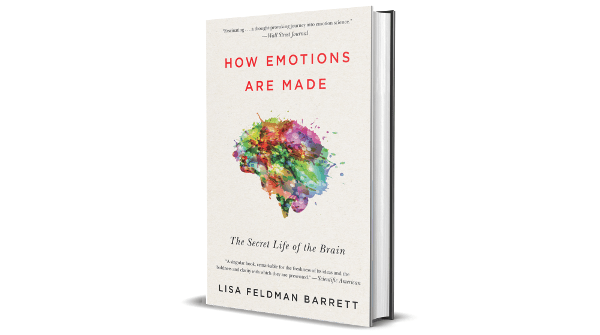
And this brings me to a fascinating idea from the book How Emotions Are Made: The Secret Life of the Brain by neuroscientist Lisa Feldman Barrett.
Words Don’t Contain Meaning. Our Brain Creates It.
One of the core ideas in Barrett’s book is that emotions are not fixed reactions that automatically happen to us. Instead, our brain constructs emotions by interpreting sensory information using concepts it has learned.
We hear sounds.
We see facial expressions.
We observe context.
Then our brain uses concepts and language it has learned throughout life to predict what those signals mean. In other words, words themselves don’t carry meaning in a fixed way. Our brain assigns meaning to them.
This means two people can hear the exact same word and interpret it very differently, because their brains have built different associations around it.
The word “sorry” is a good example. The word “sorry” usually signals an apology, acknowledgment that someone did something wrong or caused inconvenience. In Indonesia, the word “sorry” has slowly expanded its meaning into many other situations.
Sometimes it means apology.
Sometimes it means politeness.
Sometimes it means softening a sentence.
And sometimes… it means absolutely nothing.
“Sorry” As a Default Social Buffer
In everyday conversations, many people treat “sorry” as a universal safe word. They believe you can never go wrong by saying it. But I disagree. You absolutely can. Let’s look at some examples.
Situation 1: The Actual Apology
This is the original function of the word. Example: “Sorry, I’m late.” Here the meaning is clear. You acknowledge responsibility for something that inconvenienced someone else. In this case, “sorry” signals accountability and respect. This is when the word works perfectly.
Situation 2: The Softener
Example: “Sorry, can I ask a question?” Many people use “sorry” here simply to soften the sentence. It becomes similar to saying: “Excuse me.” Or: “I hope I’m not bothering you.” In this case, the word functions as a social lubricant. Not necessarily wrong, but also not necessary.
Situation 3: The Indonesian Politeness Habit
Now we arrive at the Gojek example. Driver: “Sorry.” What did he mean? He possibly mean:
- Excuse me
- Here you go
- Please take this
- Just being polite

But the word chosen was still “sorry.” Here the word loses its original meaning entirely. It becomes an automatic politeness reflex. This happens a lot in Indonesia. You’ll hear it when:
- handing someone something
- passing in front of someone
- even starting a conversation
“Sorry ya…”
The strange thing is that nothing actually requires an apology.
When “Sorry” Lowers Your Position
There’s another subtle effect people rarely think about. Language signals social positioning.
When you say “sorry,” you implicitly place yourself in a position of fault or lower authority. This is not always a problem, when you truly made a mistake. But when you use it unnecessarily, it can unintentionally shift the power dynamic in a conversation.
For example:
“Sorry, can I ask something?”
versus
“Can I ask something?”
The first suggests hesitation and possible wrongdoing. The second is simply direct.
Another example:
“Sorry, but I think we should change the strategy.”
versus
“I think we should change the strategy.”
The difference is subtle, but psychologically meaningful. One communicates confidence. The other communicates self-doubt.
When “sorry” appears too frequently, it can make someone sound as if they are constantly apologizing for existing.
Why Our Brain Accepts This Habit
This is where Barrett’s theory becomes interesting again. Our brain builds concepts through repeated experiences. If we repeatedly hear “sorry” used in situations that are not apologies, our brain gradually updates its concept of the word.
The concept becomes broader. “Sorry” may start to mean:
- politeness
- social awareness
- friendliness
- caution
But here’s the problem. Different people’s brains may construct different interpretations.
Some people hear politeness.
Others hear apology.
Others hear insecurity.
So the same word can produce different emotional reactions depending on the listener.
The “You Can Never Go Wrong With Sorry” Myth
A friend once told me: “You can never go wrong by saying sorry.” I strongly disagree. You absolutely can.
Imagine these situations:
Situation A
A manager says to their team:
“Sorry, but we need to work this weekend.”
The apology implies guilt or weakness.
But if the situation truly requires leadership and decision-making, this framing can undermine authority.
Situation B
Someone gives feedback:
“Sorry, but your presentation was confusing.”
The “sorry” softens the criticism, but it also creates ambiguity.
Is the person apologizing for giving feedback? Or apologizing for the problem?
Sometimes clarity is better than politeness.
Situation C
A person constantly says:
“Sorry… sorry… sorry…”
even when nothing is wrong.
Eventually the word loses meaning completely.
When a real apology is needed later, it carries less weight.
Language Shapes Relationships
What fascinates me about Barrett’s theory is how it highlights the power of language. Words are not just tools for communication. They are tools for constructing reality. Every time we use a word, we reinforce a concept in our brain and in other people’s brains. So when we casually use “sorry” in situations that don’t require apology, we are slowly changing what the word means, for ourselves and for others. This might seem trivial.
But language subtly shapes how we position ourselves in social relationships. Are we confident or hesitant? Equal or subordinate? Direct or overly cautious?
Sometimes a single word can shift that balance.
Going back to the Gojek driver. Maybe what he really meant was simply: “Permisi.” Translated to be “excuse me” in English. A neutral, respectful word that doesn’t imply wrongdoing.
Interestingly, Bahasa Indonesia already has many words that can replace “sorry” depending on context:
- permisi — excuse me
- maaf — apology
- tolong — please
- terima kasih — thank you
Each carries a slightly different social meaning. Perhaps the real skill in communication is not choosing the safest word, but choosing the most accurate one.
Critical Thinking Exercise
Try observing how often people say “sorry” in everyday conversation. You might start noticing it everywhere:
- before asking questions
- before speaking
- when handing objects
- when entering rooms
- when interrupting
And then ask yourself a simple question:
Was there actually something to apologize for?
Sometimes yes. But often, the answer is no. And when that happens, maybe the better choice is simply not saying it at all.
Another word that recently has expanded its meaning is “aman”. Drop in the comment other words you find have expanded.
Words do matter. Not just in what they say, but in what our brains construct them to mean.
 Cinthya
Leave a comment